


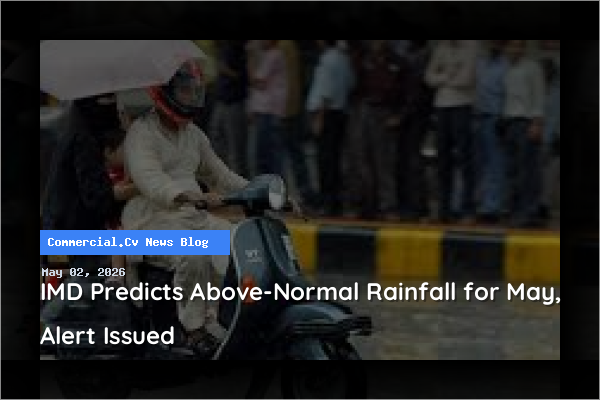
India Braces for Wetter May as IMD Confirms Above-Normal Rainfall Forecast
The India Meteorological Department (IMD) has issued a significant alert, forecasting a higher-than-average rainfall across India for the month of May. This prediction, based on sophisticated weather modelling and analysis, suggests a departure from typical pre-monsoon patterns and carries substantial implications for various sectors, including agriculture, water management, and disaster preparedness.
Background: Understanding India's Pre-Monsoon Season
May is a crucial month in India's meteorological calendar. It marks the transition from the dry, hot summer to the onset of the Southwest Monsoon, which is the lifeline of the country's agriculture. While May typically experiences some pre-monsoon showers, particularly in southern and northeastern regions, the IMD's forecast of "above normal" rainfall indicates a potential for more widespread and intense precipitation than usual. These pre-monsoon showers are often characterized by thunderstorms, hailstorms, and gusty winds, and their intensity and distribution can significantly impact crop yields and water reservoirs.
Key Developments: What the IMD Forecast Entails
According to the latest projections from the IMD, several meteorological factors are contributing to the likelihood of increased rainfall activity in May. While the original report from India Today does not delve into the specific scientific drivers, such forecasts are typically based on:
- Oceanic Conditions: Anomalies in sea surface temperatures in the Indian Ocean and Pacific Ocean, such as the state of the El Niño-Southern Oscillation (ENSO), play a pivotal role in influencing monsoon patterns.
- Atmospheric Circulation: Changes in atmospheric pressure systems and wind patterns over the Indian subcontinent and surrounding oceans are closely monitored.
- Model Projections: Advanced numerical weather prediction models are run and their outputs are analyzed to forecast rainfall probabilities and anomalies.
The confirmation of an "above normal" rainfall scenario for May serves as a crucial alert, prompting authorities and stakeholders to prepare for potential weather-related challenges and opportunities.
Impact & Analysis: Navigating the Consequences of Increased Rainfall
The prospect of above-normal rainfall in May presents a dual-edged sword for India. On one hand, it can be a boon for the agricultural sector, especially for crops that are sown or transplanted during this period or that benefit from replenished soil moisture ahead of the main monsoon. Farmers who have been grappling with water scarcity might find some respite. Furthermore, increased rainfall can contribute positively to the filling of reservoirs, which is vital for irrigation, drinking water supply, and hydroelectric power generation throughout the year.
However, this forecast also raises concerns about potential adverse impacts. Increased rainfall, particularly if it is concentrated and intense, can lead to:
- Flooding: Low-lying areas and riverine regions could be susceptible to flash floods and inundation, necessitating proactive disaster management and evacuation plans.
- Damage to Standing Crops: While some crops might benefit, others, especially those sensitive to waterlogging or heavy rainfall during their growth stages, could suffer damage. Hailstorms, often associated with pre-monsoon activity, can be particularly destructive to crops like fruits and vegetables.
- Disruption to Infrastructure: Heavy rainfall can impact transportation networks, leading to delays and disruptions. It can also pose challenges for ongoing construction projects and outdoor activities.
- Health Risks: Increased moisture can lead to a rise in vector-borne diseases like malaria and dengue, requiring public health authorities to be on high alert for preventative measures.
For businesses in sectors like agriculture, logistics, and insurance, this forecast necessitates a strategic review of their operational plans and risk mitigation strategies. Companies involved in agricultural inputs might see increased demand, while those reliant on outdoor operations might need to factor in potential delays.
What's Next: Preparedness and Mitigation Strategies
The IMD's alert is a call to action for all stakeholders. Government agencies, disaster management authorities, and local administrations need to:
- Enhance Monitoring: Intensify weather monitoring systems and disseminate timely and accurate weather information to the public and relevant sectors.
- Strengthen Disaster Preparedness: Review and update disaster management plans, ensuring adequate resources, personnel, and communication channels are in place to respond to potential floods, landslides, and other rain-related emergencies.
- Support Agriculture: Provide farmers with advisories on crop management, drainage techniques, and pest control in anticipation of increased rainfall.
- Public Awareness Campaigns: Educate the public about safety measures to be taken during thunderstorms, heavy rainfall, and potential flooding.
For businesses, it is an opportune time to leverage technology for better weather forecasting integration into their supply chain and operational planning. Advanced analytics can help predict the impact of weather on logistics, inventory management, and resource allocation.
As India heads into May, the IMD's forecast of above-normal rainfall underscores the dynamic nature of its climate and the critical importance of preparedness. While the increased precipitation could bring much-needed relief to some regions, it also demands vigilance and proactive measures to mitigate potential risks and harness the benefits effectively.
Source: India Today



Share on