


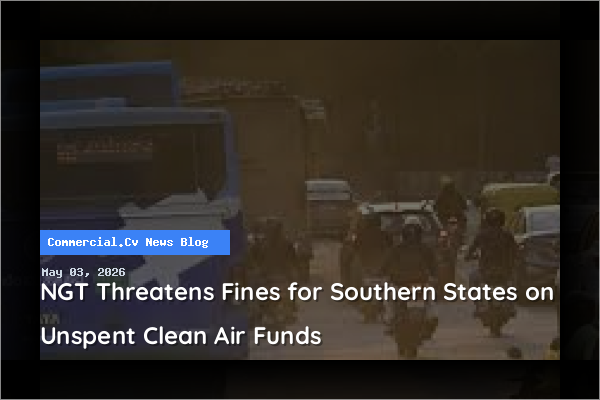
NGT Mandates Fund Utilisation for Air Quality Improvement, Warns of Penalties
The National Green Tribunal (NGT) has delivered a strong directive to the southern Indian states, emphasizing the critical need for prompt and effective utilization of funds earmarked for combating air pollution. In a significant order, the tribunal has made it clear that any state failing to deploy these crucial financial resources towards implementing clean air initiatives will face substantial penalties in the form of fines. This ruling underscores the NGT's commitment to tackling India's persistent air quality crisis and holds state governments accountable for their role in mitigating the environmental and health impacts of pollution.
Background: The Pervasive Challenge of Air Pollution in India
Air pollution remains one of India's most pressing environmental and public health challenges. Cities across the nation consistently rank among the most polluted globally, with severe consequences for respiratory health, cardiovascular diseases, and overall quality of life. The Indian government, recognizing the gravity of the situation, has allocated significant funds to various state governments under schemes designed to improve air quality. These funds are intended for a range of interventions, including promoting cleaner fuels, enhancing public transportation, controlling industrial emissions, managing stubble burning, and developing green infrastructure. However, reports have frequently highlighted a concerning trend of underutilization of these funds by many states, hindering the progress of much-needed environmental remediation efforts.
Key Developments: NGT's Firm Stance on Fund Utilisation
The recent order from the NGT, as reported by The Hindu, signals a shift towards stricter enforcement and accountability. The tribunal has explicitly warned that the southern states must demonstrate tangible progress in utilizing the allocated clean air funds. The implication is that mere allocation of funds is insufficient; states must show concrete action and expenditure on approved projects aimed at improving air quality. While specific details of the allocated amounts and the exact timelines for utilization were not elaborated in the initial reports, the NGT's message is unequivocal: the money is meant for action, and inaction will have financial repercussions. This proactive stance by the NGT is crucial in pushing states to prioritize environmental protection and address the urgent need for cleaner air.
The NGT's directive is likely a response to ongoing concerns about the slow pace of implementation of air pollution control measures despite the availability of financial resources. The tribunal, acting as a quasi-judicial body, has the authority to issue orders and directions to government bodies and industries to ensure environmental compliance. By threatening fines, the NGT aims to create a sense of urgency and ensure that budgetary allocations translate into tangible improvements in air quality. This approach moves beyond advisory roles and into a more directive and punitive framework, compelling states to act decisively.
Impact and Analysis: Driving Accountability and Action
The NGT's warning has significant implications for environmental governance in India. Firstly, it places a direct spotlight on the performance of state governments in managing environmental funds. This can lead to increased transparency and public scrutiny of how these funds are being spent, or more importantly, not being spent. Secondly, the threat of fines acts as a powerful incentive for states to expedite the planning, approval, and execution of clean air projects. This could potentially unlock stalled initiatives and accelerate the adoption of cleaner technologies and practices.
From a business and technology perspective, this development could stimulate demand for innovative solutions in the pollution control sector. Companies offering technologies for monitoring air quality, developing electric vehicles, promoting renewable energy, managing waste, and implementing industrial emission control systems may find new opportunities as states scramble to utilize their funds effectively. Furthermore, it highlights the importance of robust project management and efficient bureaucratic processes within government agencies to ensure timely fund disbursement and project completion. The challenge for states will be to move beyond bureaucratic hurdles and implement projects that deliver measurable improvements in air quality, rather than simply spending money to avoid penalties.
The effectiveness of this directive will depend on several factors, including the clarity of guidelines for fund utilization, the capacity of state agencies to implement projects, and the NGT's commitment to follow through with penalties if necessary. It is also crucial that the funds are channeled into projects with a proven track record of reducing pollution and that the long-term sustainability of these initiatives is ensured. The focus should remain on achieving actual improvements in air quality for the benefit of citizens, rather than on a mere financial compliance exercise.
What's Next: A Call for Proactive Governance and Technological Integration
Following this stern warning, the southern states are expected to review their strategies for air pollution control and accelerate the deployment of allocated funds. This may involve:
- Conducting thorough audits of unspent funds and identifying reasons for delays.
- Streamlining approval processes for clean air projects.
- Increasing collaboration with technology providers and environmental experts.
- Launching public awareness campaigns to garner support for pollution control measures.
- Prioritizing projects with a high potential for impact on air quality, such as enhancing public transport infrastructure and promoting renewable energy sources.
The NGT's order serves as a critical reminder that environmental protection requires not just financial allocation but also diligent execution and accountability. The coming months will be crucial in determining how effectively these southern states respond to the tribunal's directive and whether this will mark a turning point in India's fight against air pollution.
Source: The Hindu



Share on